Meet the Green STEAM Partners: Seven Countries, One Shared Vision
Updated: 11 hours ago
Different landscapes, different educational experiences and one shared commitment to developing innovative approaches to environmental education.
Green STEAM brings together seven organisations from Iceland, Ireland, Czechia, Greece, Croatia, Poland and Italy, combining expertise in environmental education, scientific research, digital technologies, outdoor learning and creative teaching methodologies. Supported by the Erasmus+ programme, the partnership is working to develop practical educational resources that help teachers connect scientific investigation with local environments, sustainability and interdisciplinary STEAM education.
One of the project’s greatest strengths is the diversity of its partners. The consortium includes primary schools, a university and organisations specialising in education, technology and international cooperation. Each contributes a different perspective, helping ensure that the educational approaches developed through Green STEAM are scientifically informed, practical for teachers and adaptable to different educational settings across Europe.
Connecting Education with Local Environments
Coordinating the partnership is GeoCamp Iceland, an educational organisation based in Reykjanes UNESCO Global Geopark. GeoCamp specialises in geoscience communication, place-based education, sustainability and field-based learning, using Iceland’s dynamic natural environments to connect scientific concepts with direct observation and investigation. Within Green STEAM, GeoCamp contributes expertise in outdoor education, environmental monitoring and the development of practical teaching methodologies, while coordinating the project’s implementation and international cooperation. Iceland’s volcanic landscapes, geothermal systems and changing environmental conditions provide opportunities to investigate natural processes, climate data and the relationships between people and their surroundings.
In Ireland, HANTA contributes educational expertise and approaches to environmental learning that reflect the country’s distinctive landscapes and weather conditions. Rainfall, flooding, river systems and environmental resilience provide starting points for scientific investigations that students can undertake within their own communities. Through observation, environmental measurements and data analysis, these activities encourage students to explore how water moves through landscapes, how environmental conditions change and how communities can respond to environmental challenges. The Irish contribution demonstrates how familiar weather patterns and local environments can become meaningful subjects for interdisciplinary STEAM education.
The partnership also benefits from the scientific and educational expertise of the Technical University of Liberec in Czechia. The university contributes knowledge of environmental investigation, scientific methods and the integration of technology into education. Its work includes developing activities related to soil health and environmental conditions, encouraging students to investigate the relationships between natural systems, human activities and environmental sustainability. The university also provides an important connection between academic knowledge and practical school education, helping strengthen the scientific foundations of the project’s teaching resources. Liberec will host the partnership’s next international Learning, Teaching and Training Activity, providing an opportunity to further develop and refine the shared educational methodology.
Bringing Classroom Experience and Community Knowledge into Green STEAM
Two primary schools play an important role in ensuring that Green STEAM’s educational approaches remain relevant to everyday teaching. The 3rd Primary School of Sitia, located in eastern Crete, Greece, contributes direct classroom experience alongside a strong connection to the natural and cultural landscapes of Sitia UNESCO Global Geopark. Its educational activities explore sustainable land management, dry-stone walls, tree planting and the relationships between environmental conditions and traditional practices. These themes offer opportunities to connect science, engineering, mathematics and cultural heritage, helping students understand how communities have interacted with their environments over generations.
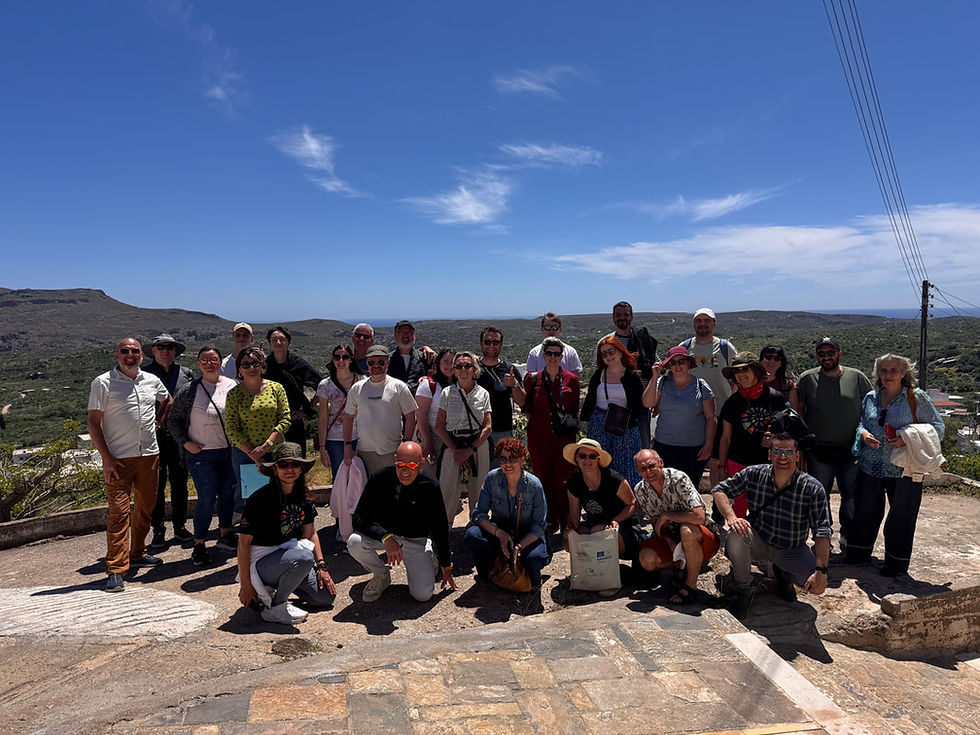
In spring 2026, the Greek school hosted an international Green STEAM training activity in Sitia, bringing partners together for school visits, field investigations and collaborative educational development. The programme demonstrated how Mediterranean landscapes, geological heritage, agriculture and local traditions can become valuable resources for environmental education, while providing inspiration for lesson plans that can be adapted across the partnership.
In Croatia, Osnovna škola Sibinjskih žrtava brings another important perspective by connecting environmental learning with local community knowledge and traditional ecological practices. Its contribution includes activities related to sustainable harvesting, biodiversity and the responsible use of natural resources. These approaches encourage students to investigate the relationships between nature, culture and sustainability, while recognising that traditional knowledge can provide valuable insights into contemporary environmental challenges. The school’s participation also supports the practical development and testing of educational resources, ensuring that the project’s methodologies respond to the needs and experiences of teachers and students.
Combining Technology, Creativity and Scientific Investigation
Digital innovation and data literacy are central elements of Green STEAM, and INFOTECH in Poland contributes expertise in technology-supported learning and environmental data analysis. Its activities include biodiversity mapping, digital observation and the use of technological tools to collect, organise and interpret environmental information. These approaches can help students investigate local ecosystems, document biodiversity and identify environmental patterns, while developing skills in data analysis and critical thinking. The Polish contribution also explores the responsible use of AI-supported tools in education, emphasising the importance of evaluating digital information and ensuring that technology supports scientific inquiry rather than replacing direct observation.
Completing the partnership is APS Polygonal in Italy, which contributes creative, participatory and interdisciplinary approaches to education. Its involvement strengthens the connections between scientific investigation, digital communication and the arts, helping students explore different ways of interpreting and communicating environmental information. Creative approaches such as visual storytelling, photography and digital communication can make scientific findings more accessible while encouraging students to engage with environmental issues beyond the classroom. Polygonal’s contribution reflects an important principle of STEAM education: understanding scientific evidence is essential, but communicating that understanding effectively is equally important.
Learning Together Across Europe
Although the partners work in different educational systems and environmental settings, they share a common objective: to make environmental education more practical, engaging and relevant to young people. The diversity of the partnership creates opportunities to investigate similar environmental questions in different contexts, using shared methodologies while responding to local conditions.
Students investigating biodiversity in Poland might apply observation methods similar to those used in Croatia or Italy, while schools in Iceland and Ireland can explore environmental change through comparable approaches to measurement and data interpretation. Experiences from Mediterranean agricultural landscapes can inspire investigations into sustainable land use elsewhere, just as approaches developed in volcanic environments can demonstrate how geological processes influence ecosystems and communities.
Through international meetings, teacher training activities and collaborative development, the partners are working together to create a common educational framework, a practical Teacher Handbook and a collection of adaptable lesson plans and field activities. These resources are being developed around the Green STEAM learning cycle: Explore – Investigate – Reflect – Act, encouraging students to observe their surroundings, investigate environmental questions, evaluate evidence and consider meaningful responses.
The partnership recognises that effective environmental education must be grounded in local experiences while encouraging a broader understanding of global challenges. By combining scientific expertise, classroom practice, digital innovation, creative approaches and community knowledge, Green STEAM aims to develop educational resources that can support teachers and schools well beyond the project’s lifetime.
Seven countries, seven organisations and countless opportunities to learn from the environments around us. Together, the Green STEAM partners are helping connect local environmental experiences with a shared European approach to education for sustainability.


Comments